Physiotherapy in Belmore

Active recovery. Hands-on care. A plan that fits you.

At Belmore, hands-on treatment - including remedial massage, soft-tissue cupping and gua sha - is an important part of physiotherapy. We combine it with exercise guidance and selected treatments when they are useful, adjusting the plan to your age, health, goals and the demands of work, family, sport and everyday life.

Treatment guide

See how we combine active rehabilitation and hands-on care.

The sections below explain the treatments available at Belmore and how they may fit together. The numbers are simply a guide, not a ranking. Your physiotherapist will recommend a plan based on your presentation, goals and preferences.

Swipe to browse all nine treatments.

Your recovery foundation

Build capacity that carries into everyday life.

Active rehabilitation has the broadest support across common muscle, joint and tendon problems and gives you tools you can continue using beyond the treatment room.

From our Belmore clinicGuided home or gym rehabilitation

Physiotherapist-guided exercise

A clear, progressive plan built around your goals.

Well-planned exercise is a central part of recovery for many muscle, joint and tendon problems. It can help improve pain and physical function while building the strength, capacity and confidence needed for the activities that matter to you.

Your physiotherapist will assess your current ability and goals, then develop a practical home or gym program with a manageable starting point and clear progression. We teach each movement, help you respond to flare-ups and adapt the plan as your capacity changes.

Because no single program suits everyone, we focus on an approach that is appropriately challenging, achievable and sustainable - helping you become increasingly confident managing your recovery.
Evidence and guidance

Hands-on soft-tissue care

Massage, cupping and gua sha are regular parts of how we treat.

At Belmore, these techniques belong together. We commonly use remedial massage and, when appropriate, add soft-tissue cupping or gua sha and scraping during the same course of care. The choice depends on your presentation, comfort and preferences, and is paired with movement and exercise.

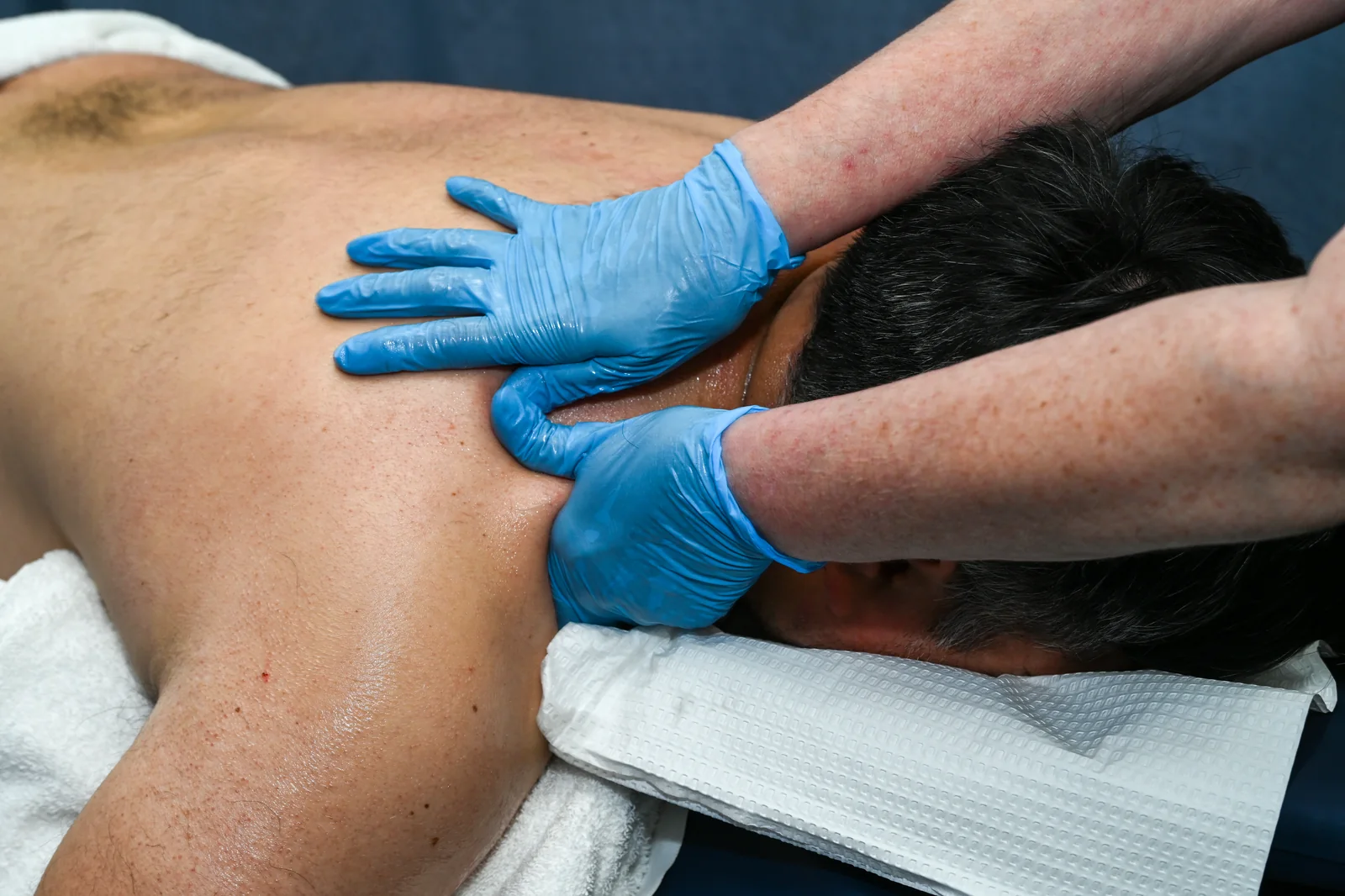
From our Belmore clinicHands-on soft-tissue massage and movement treatment

Remedial massage within physiotherapy

A regular part of physiotherapy at Belmore.

Remedial massage is commonly included in our physiotherapy sessions when it suits the condition and you are comfortable with it. We use hands-on soft-tissue treatment to help settle soreness and stiffness so movement, exercise and everyday activity feel more manageable.

We adjust the area treated, pressure and time to your presentation, comfort and preferences. Depending on what we find, we may combine massage with soft-tissue cupping or gua sha and scraping.

These techniques support the session; they do not replace assessment, exercise or progressive rehabilitation.

Evidence and guidance
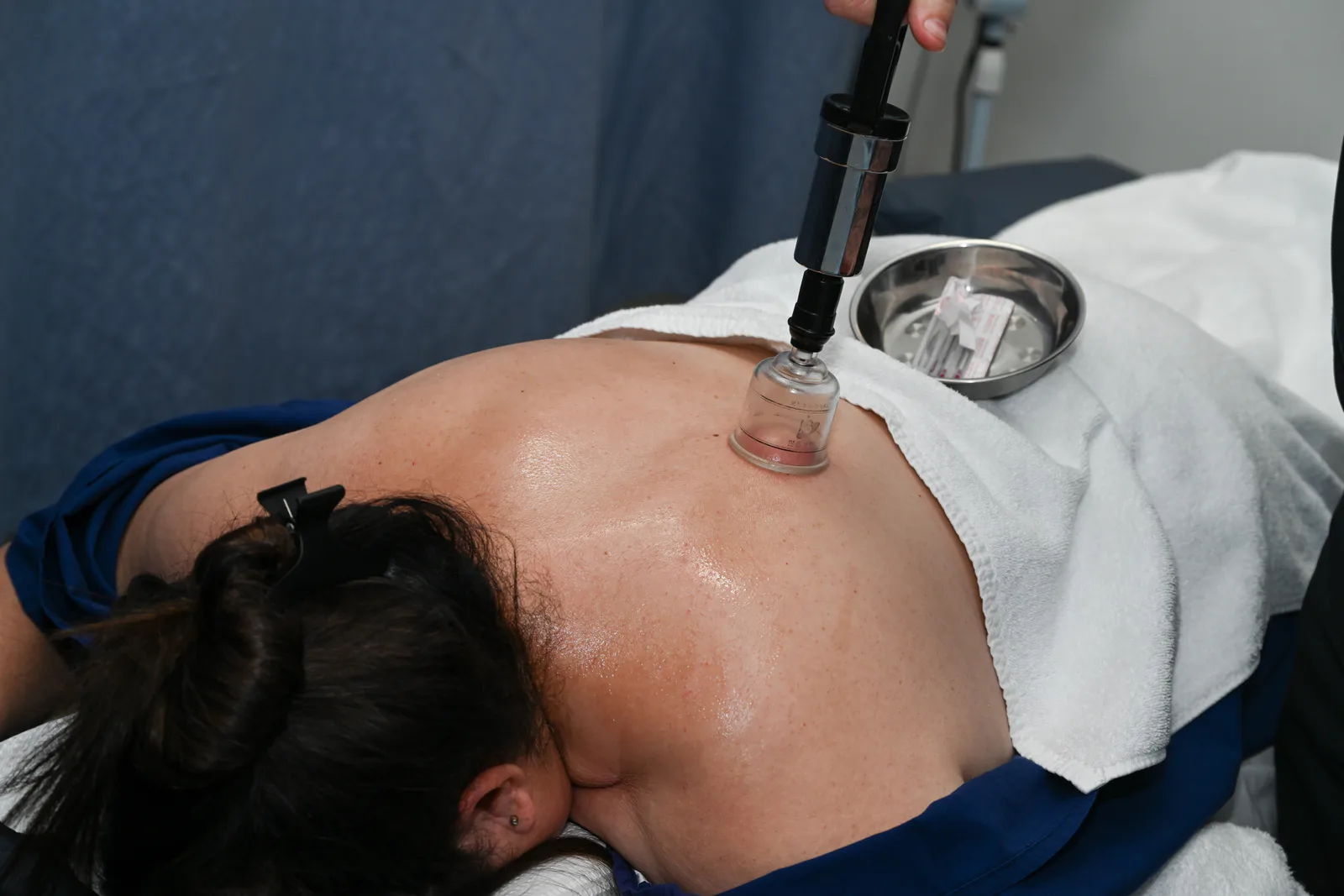
From our Belmore clinicDry soft-tissue cupping treatment

Soft-tissue cupping

A familiar part of our hands-on toolkit.

Soft-tissue cupping uses purpose-made cups to apply gentle, adjustable suction. We often use dry cupping alongside massage when a different pressure or treatment sensation may suit the area being treated.

For selected patients, it may provide short-term relief from discomfort or perceived tightness, making movement and exercise feel easier. We review your response and continue only when it is adding something useful.

Our dry cupping does not pierce the skin. Temporary circular marks, redness or mild tenderness can occur and usually fade. We adjust the suction to your comfort and can stop at any time.

Evidence and guidance
From our Belmore clinicInstrument-assisted soft-tissue treatment

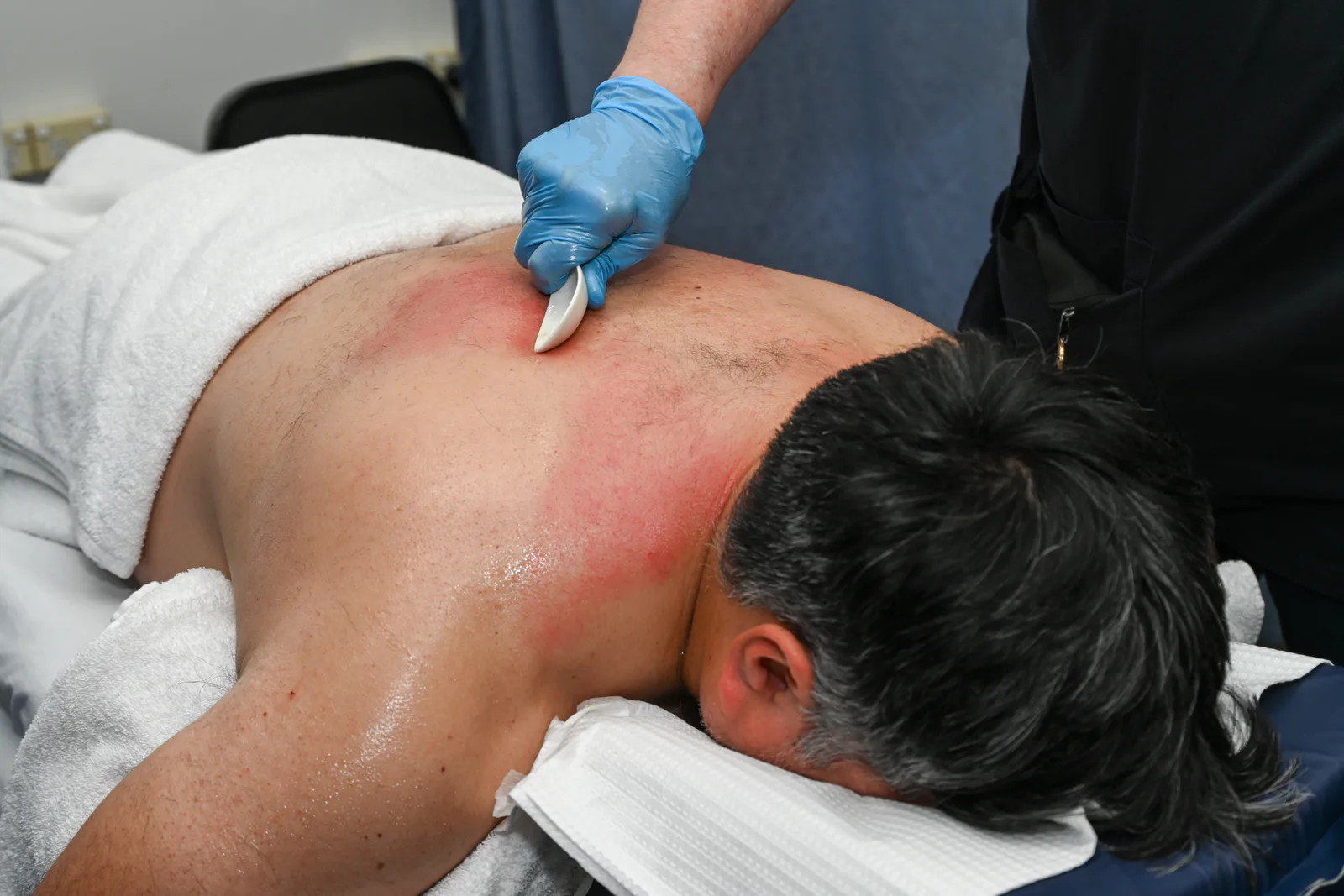
Gua sha and soft-tissue scraping

Focused soft-tissue work alongside massage.

Gua sha, also called soft-tissue scraping or instrument-assisted soft-tissue mobilisation, uses a smooth-edged tool with controlled pressure. We use it alongside massage when more focused work over a particular area is appropriate.

For some people, it may ease discomfort or perceived tightness and improve movement in the short term. It remains one part of a wider plan that may include exercise, activity advice and a gradual return to normal activity.

Temporary redness, tenderness or mild bruising can occur. We consider your skin, circulation, medications and health history, explain what to expect and ask for your consent before treatment.

Evidence and guidance

Other treatment options

Not every treatment suits every problem.

Dry needling, manual therapy and shockwave each have a particular role. We use them when the assessment and your goals point that way, explain the alternatives and keep checking whether the treatment is helping.

From our Belmore clinicClinical dry needling treatment

Dry needling

Targeted relief to support comfortable movement.

Dry needling uses a fine, sterile, single-use needle to target selected muscles. For some people, it can provide short-term pain relief and make movement or exercise feel more comfortable, creating a useful opportunity to progress rehabilitation.

We use dry needling selectively and combine it with education, exercise and a plan matched to your goals. Before treatment, your physiotherapist will assess suitability, explain the options and ask for your consent.

Temporary soreness, minor bleeding or bruising can occur; serious complications are uncommon. We review its value with you and continue while it is contributing to meaningful progress.

Evidence and guidance
From our Belmore clinicJoint mobilisation and assisted movement

Manual therapy

Hands-on care to help movement feel easier.

Manual therapy is assessment-led, hands-on care that may include joint mobilisation, assisted movement, stretching or, for selected areas outside the neck, a quick controlled manipulation. For some back, neck and joint problems, it can ease pain or stiffness in the short term and help make movement and exercise more comfortable.

We use manual therapy strategically to support a wider rehabilitation plan. Your physiotherapist will choose techniques according to your presentation and preferences, explain alternatives and relevant risks, and ask for your consent.

Temporary soreness or stiffness can occur.

Evidence and guidance
From our Belmore clinicGymna ShockMaster 500 treatment

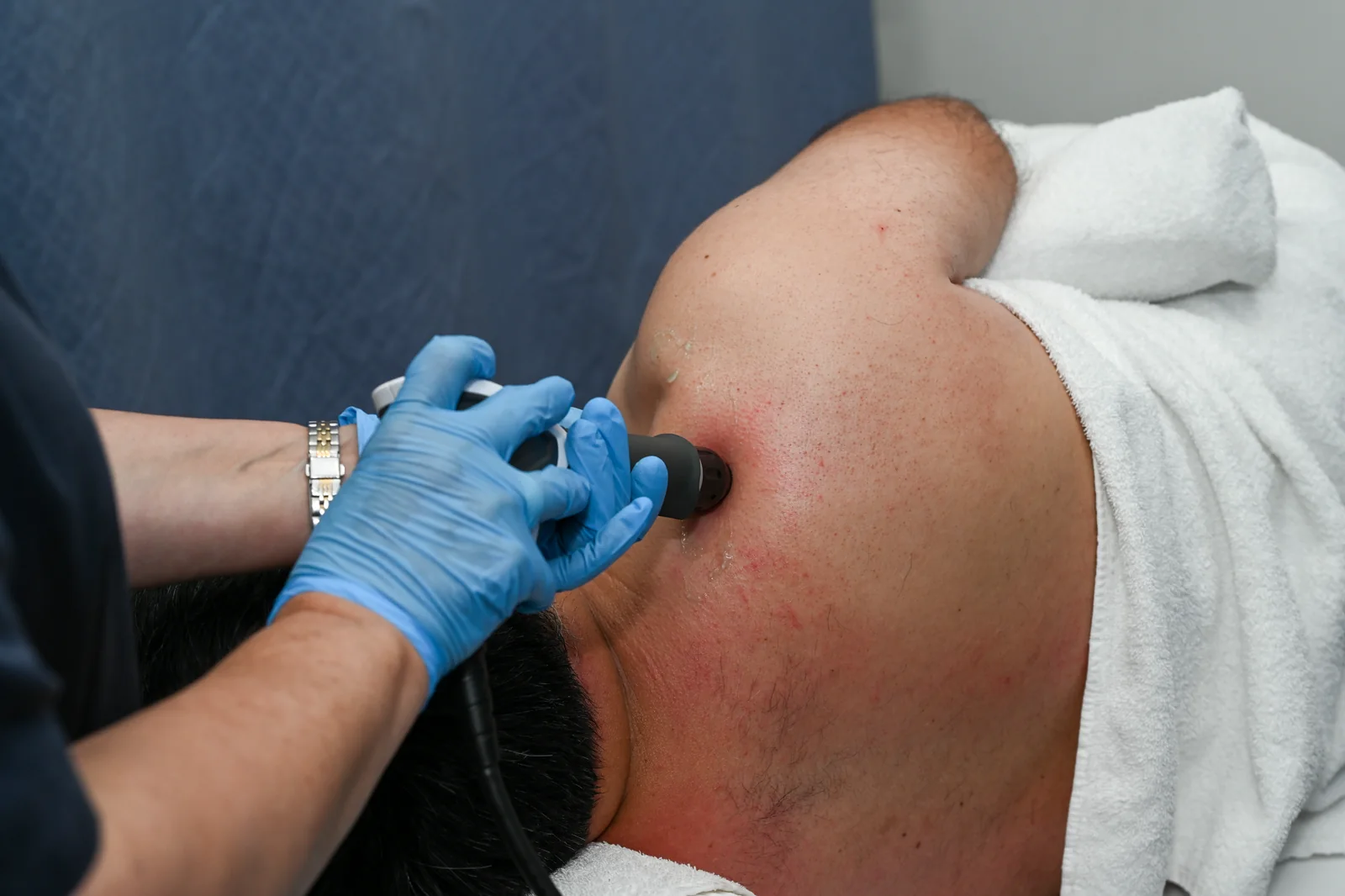
Radial shockwave therapy

Focused care for persistent tendon and heel pain.

At Belmore Physiotherapy, we use the Gymna ShockMaster 500 to deliver radial pressure-wave treatment, commonly known as radial shockwave therapy. This non-invasive option can be useful for selected, longer-standing tendon and soft-tissue presentations, particularly persistent plantar heel pain.

Research suggests it may help reduce pain and improve function for appropriately selected patients. We combine shockwave with education, progressive exercise and load management, then review how you are responding.

Your physiotherapist will assess whether it is suitable, explain what to expect and discuss alternatives before treatment. We focus on meaningful progress rather than promising a particular outcome.

Evidence and guidance

Electrical stimulation

Electrical stimulation can be used for two different jobs.

NMES, TENS and interferential current all use pads placed on the skin, but we do not use them for the same reason. NMES helps a weakened muscle contract. TENS and interferential are used to try to ease pain for a while. We explain what we are aiming for, set the intensity with you and check your response.

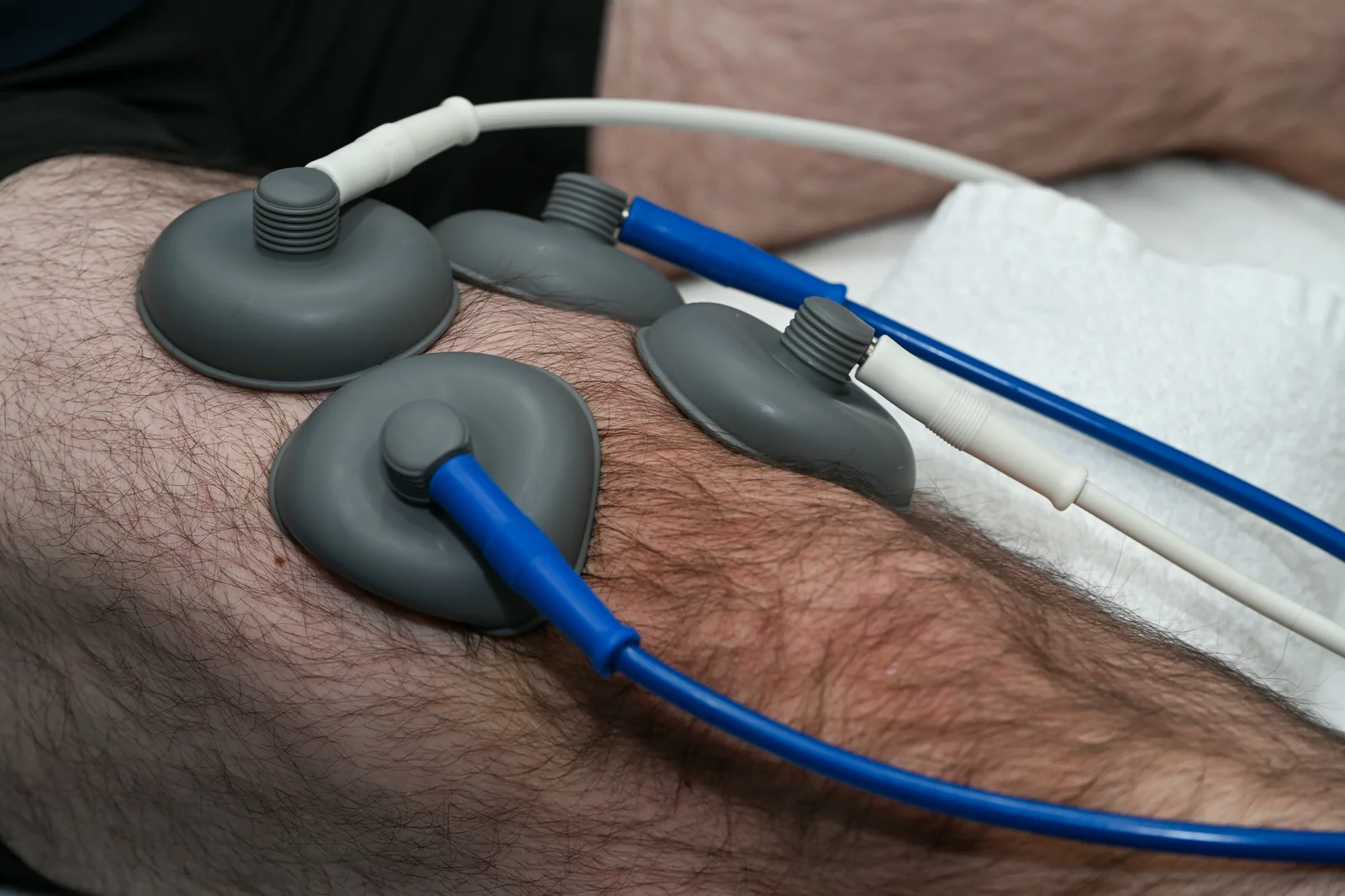
From our Belmore clinicQuadriceps activation during neuromuscular electrical stimulation

NMES: muscle activation

Helping a weakened muscle switch on.

NMES stands for neuromuscular electrical stimulation. Pads placed over the muscle deliver a controlled electrical current that produces a visible contraction. We may use it when pain, swelling or surgery has made a muscle difficult to activate.

It is particularly useful in selected knee rehabilitation, including after knee replacement or ACL surgery, where it can be combined with strengthening and movement practice.

We set the intensity to achieve a useful contraction while keeping you comfortable. Before treatment, we check for implanted electronic devices, skin or sensation problems and other relevant health factors.

Evidence and guidance
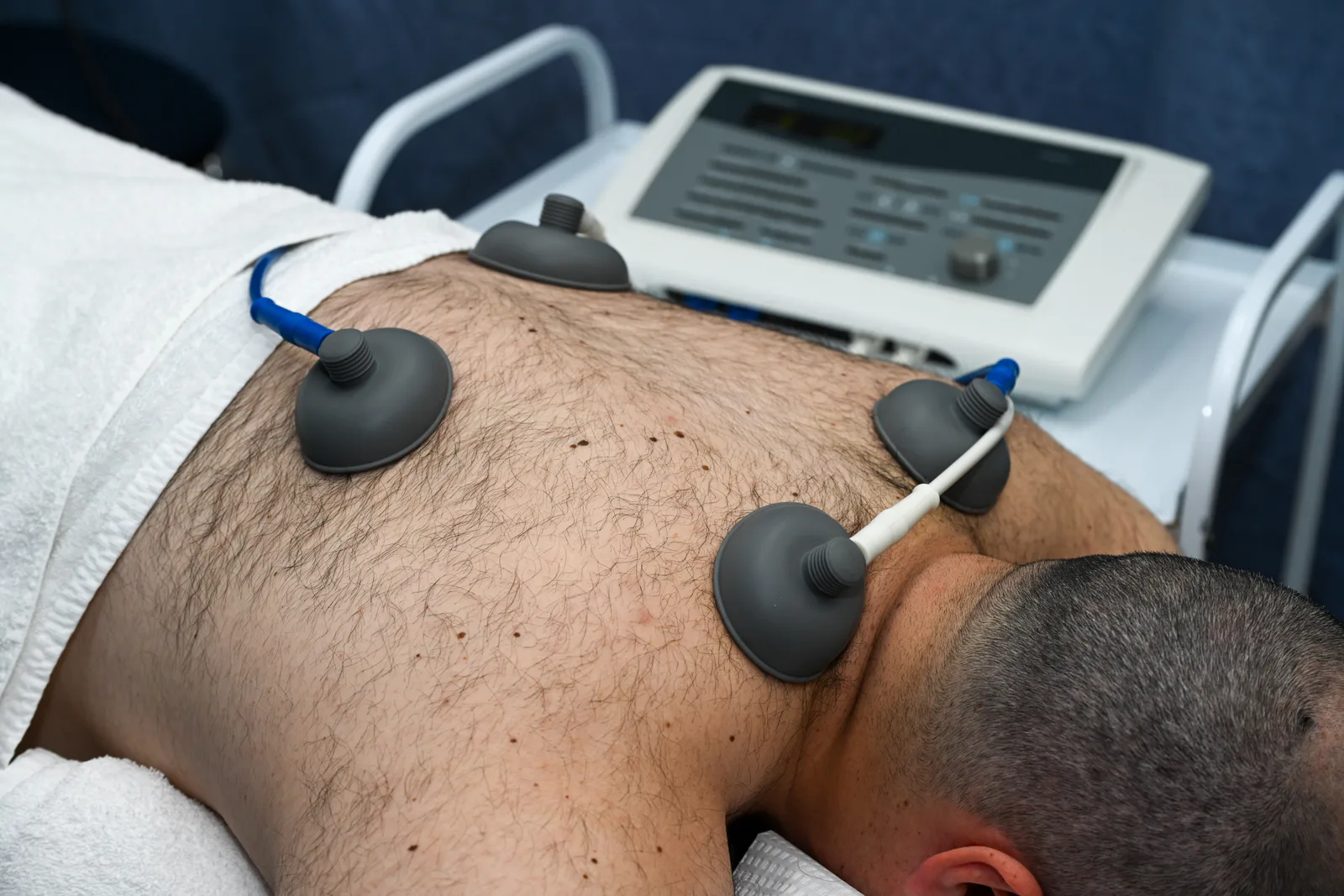
Comfort-focused TENS or interferential treatment
Photographed at our Belmore clinicComfort-focused TENS or interferential treatment

TENS and interferential: pain support

Short-term pain relief when movement is difficult.

TENS stands for transcutaneous electrical nerve stimulation. TENS and interferential current also use pads on the skin, but unlike NMES they are generally used to help settle pain rather than activate a muscle. Most people feel a comfortable tingling.

If pain is making it hard to move or exercise, we may try one during a session and see whether it helps. Any relief is usually temporary, so electrical stimulation supports rather than replaces the broader rehabilitation plan.

We choose the settings with you, adjust the intensity to your comfort and stop if it does not feel right. We also check for implanted devices, skin or sensation problems and other relevant precautions.

Evidence and guidance

How we treat

What physiotherapy care looks like here.

We do not follow the same recipe for every patient. We start with what the problem is stopping you from doing, assess the relevant movement and strength, then discuss which mix of hands-on treatment, exercise and other options makes sense for you.

Assessment and medical background

We look beyond the sore spot.

All of our physiotherapists worked in public hospitals earlier in their careers. That experience helps us take account of recent surgery, acute injury and other health issues when planning care, and recognise when input from your GP or specialist may be useful.

Hands-on care at Belmore

Hands-on treatment matters here.

Remedial massage, soft-tissue cupping and gua sha are regular parts of physiotherapy at Belmore when they suit your condition, preferences and stage of recovery. We explain why we are recommending them and check that you are comfortable before treatment.

Exercise guidance

Exercise that fits your life.

We choose and teach exercises around your current ability, age and goals, rather than handing out a standard program. Your plan may focus on walking, caring for family, getting through work or returning to sport, and we adjust it as your response or circumstances change.

Book or call

Book a physiotherapy assessment.

Already attending for the same condition? You can book a follow-up online. If you are new to the clinic, complete the Nookal intake form; this does not confirm an appointment, and reception will contact you. Existing patients with a new injury or condition should call or email reception for an initial assessment.